
Repair
A seam or flashing defect on an otherwise serviceable roof can support a focused repair. New material must be compatible with the existing membrane and connect to sound, clean material.
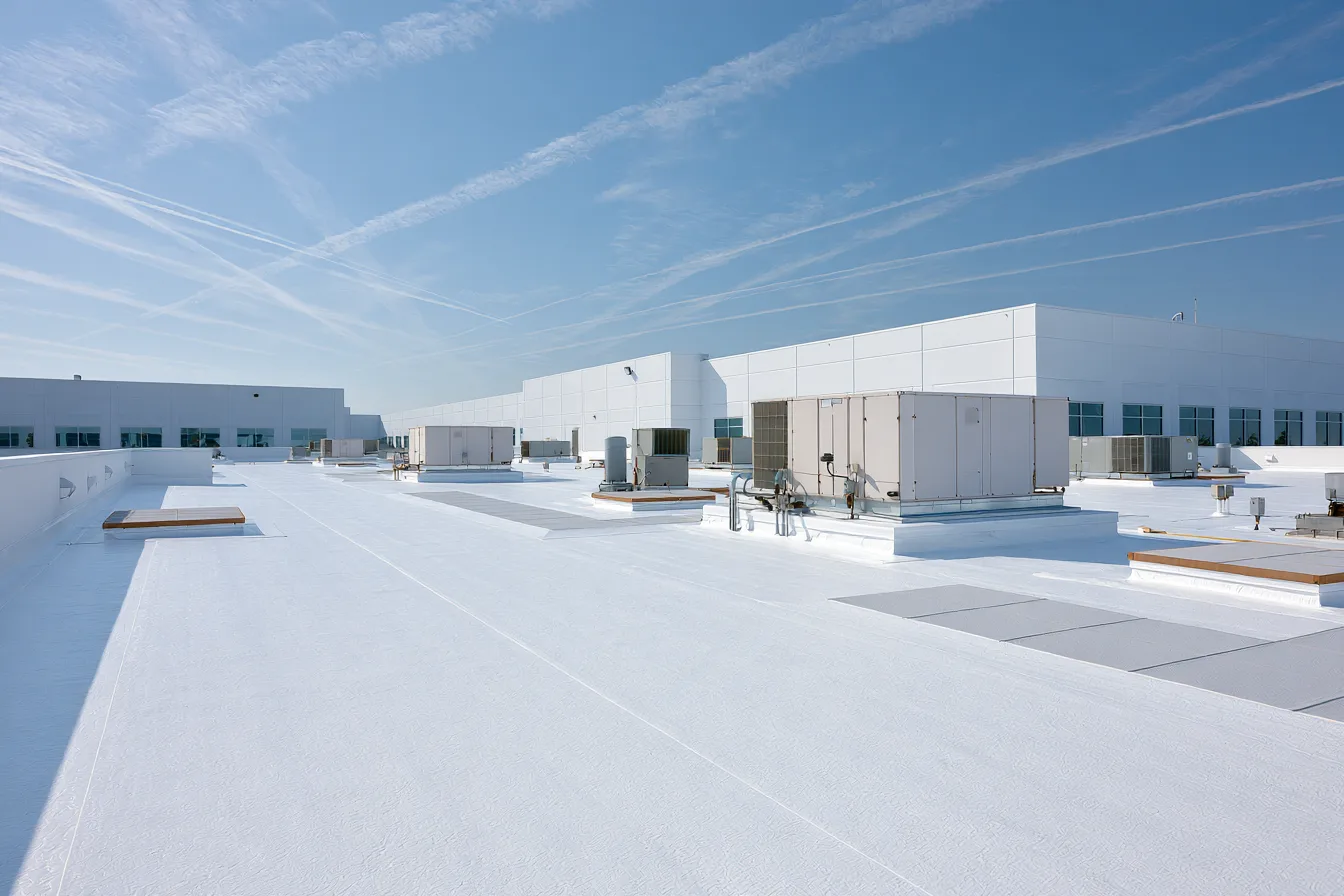
A commercial roof needs a plan for both the assembly and the building below. We help owners and property managers address leaks, evaluate system options and plan the work around property use.
Free roof inspections. A roofer walks the roof when conditions allow.
A leak over a tenant space needs more than a patch over the nearest mark. We look at the membrane, seams, curbs, penetrations and drainage, then consider the insulation and deck below. Water trapped beneath a continuous surface changes the answer: coating over it does not replace wet insulation or restore a failed base.
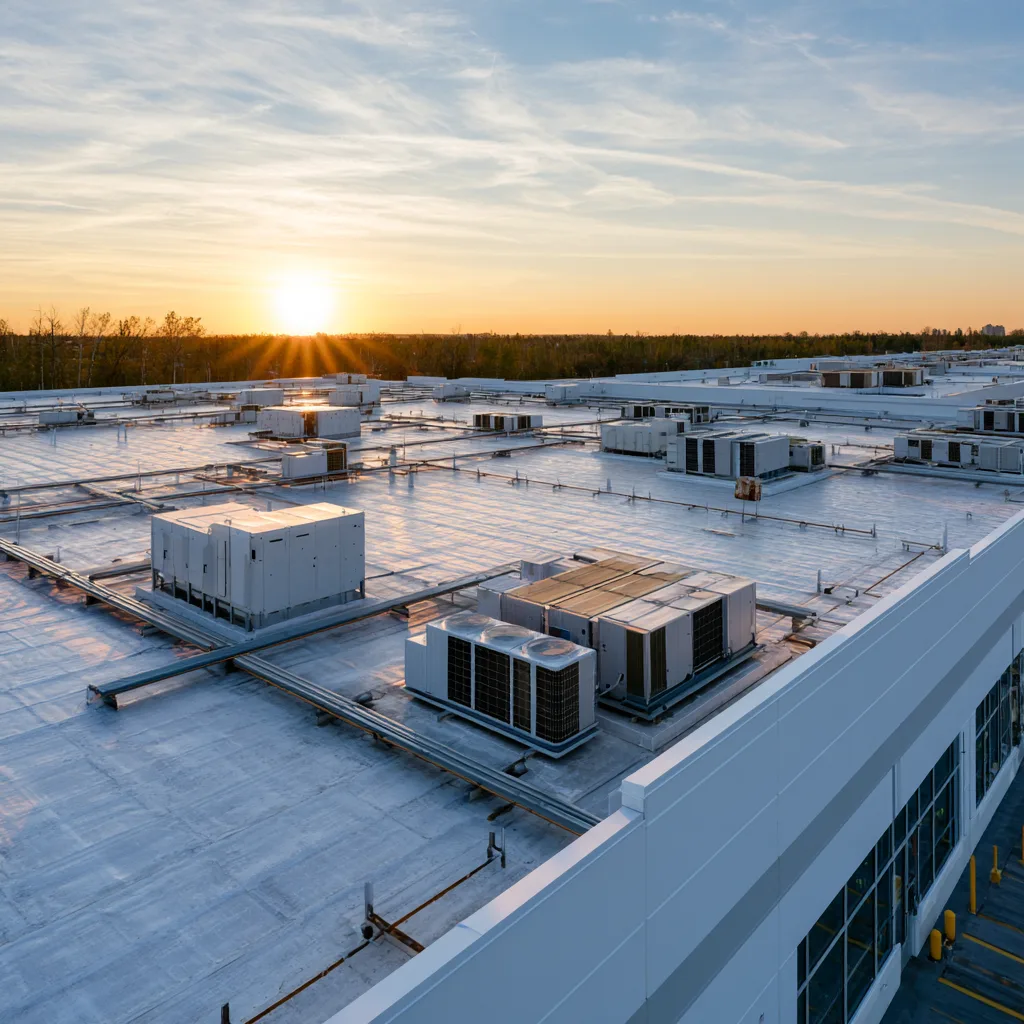
A commercial roof walk considers the roof field and the details that interrupt it. The condition of those connections helps distinguish a localized repair from work that needs to open or remove a wider area.
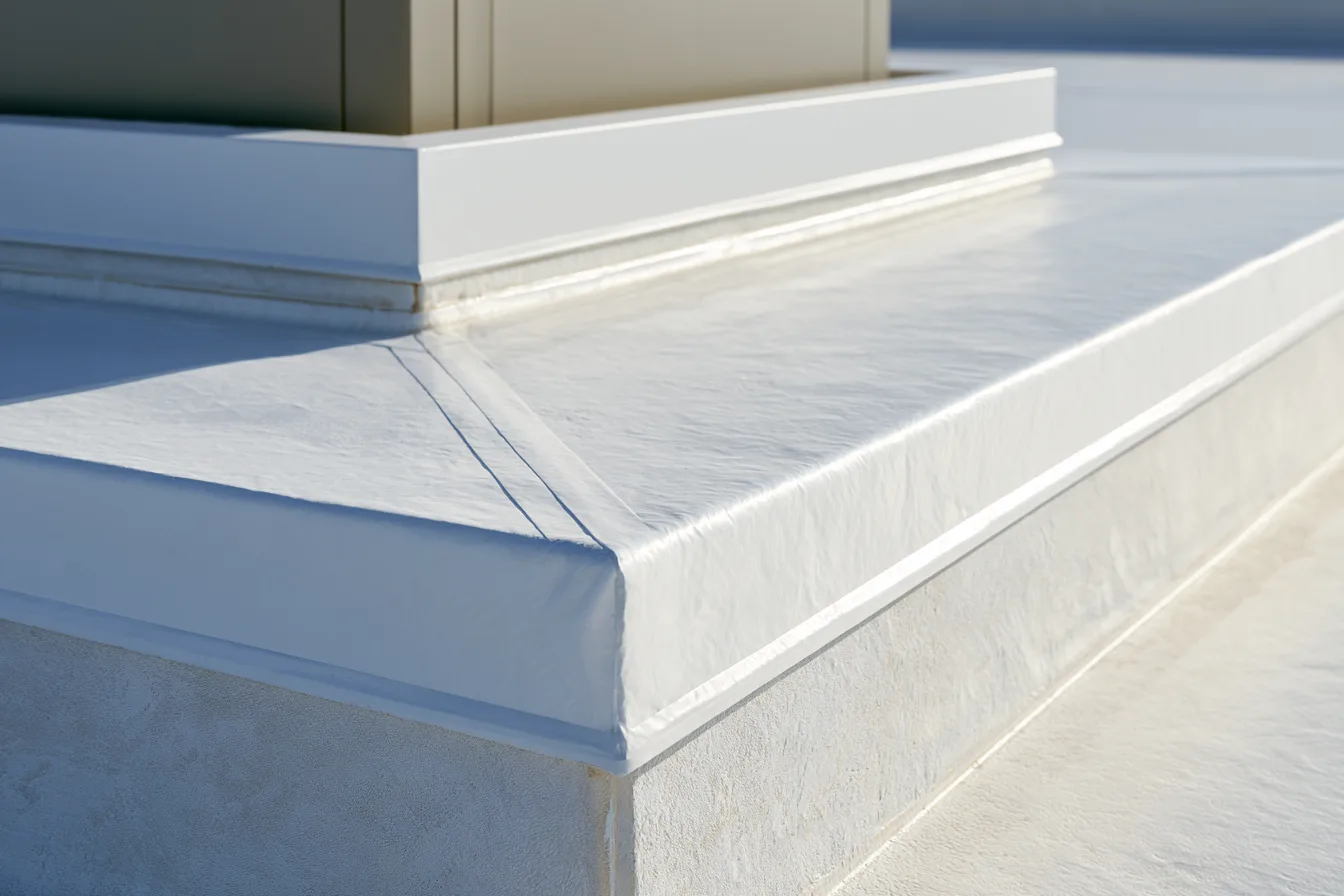
The stain below does not establish the boundary of the work. The roof system and the condition beneath its surface do.
A seam or flashing defect on an otherwise serviceable roof can support a focused repair. New material must be compatible with the existing membrane and connect to sound, clean material.
Restoration needs a suitable existing roof, compatible materials and moisture problems resolved. Recover also depends on attachment, loading and rules. Neither is a way to hide a failed base.
Widespread moisture, failed attachment or deck problems can require removal. Replacement opens the assembly so insulation, attachment and drainage can be addressed along with the new covering.
The membrane and its joining method guide the repair. Choose the system to see what gets checked and what changes its options.
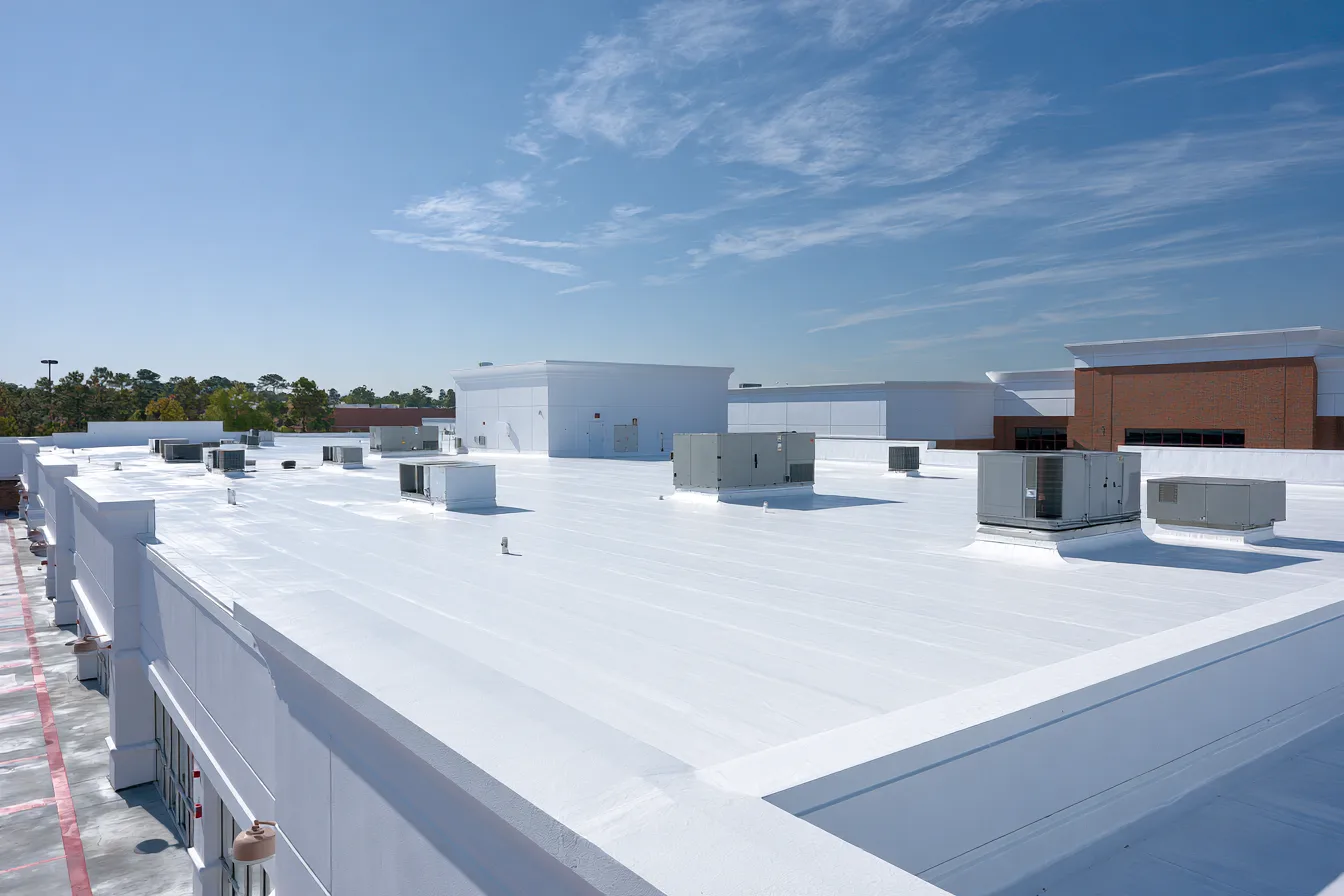
Heat-welded seams, curb details and attachment need to work with the insulation and deck.
Explore tpo roofing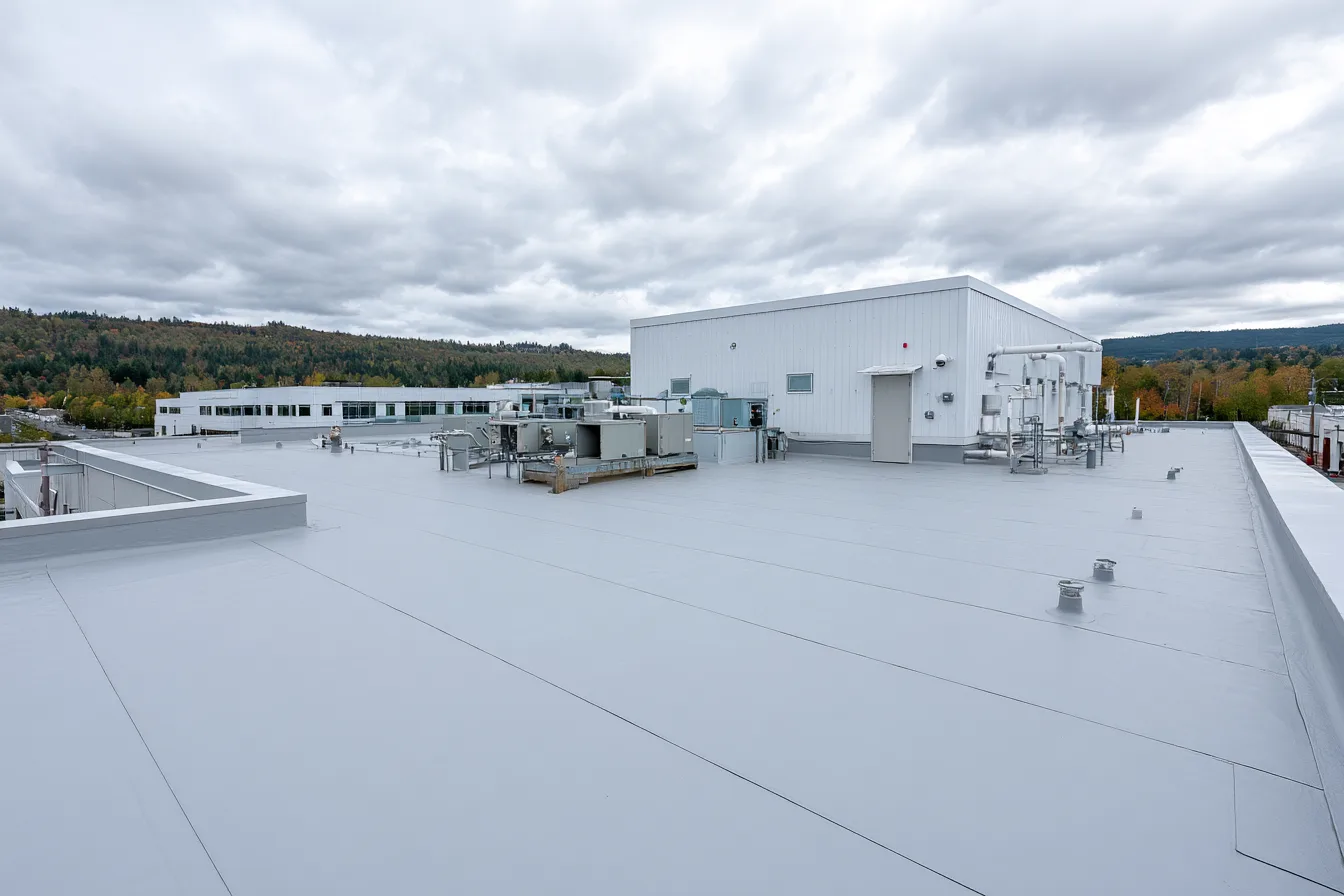
Rubber membrane repairs depend on compatible seams, flashing and surface preparation.
Explore epdm roofing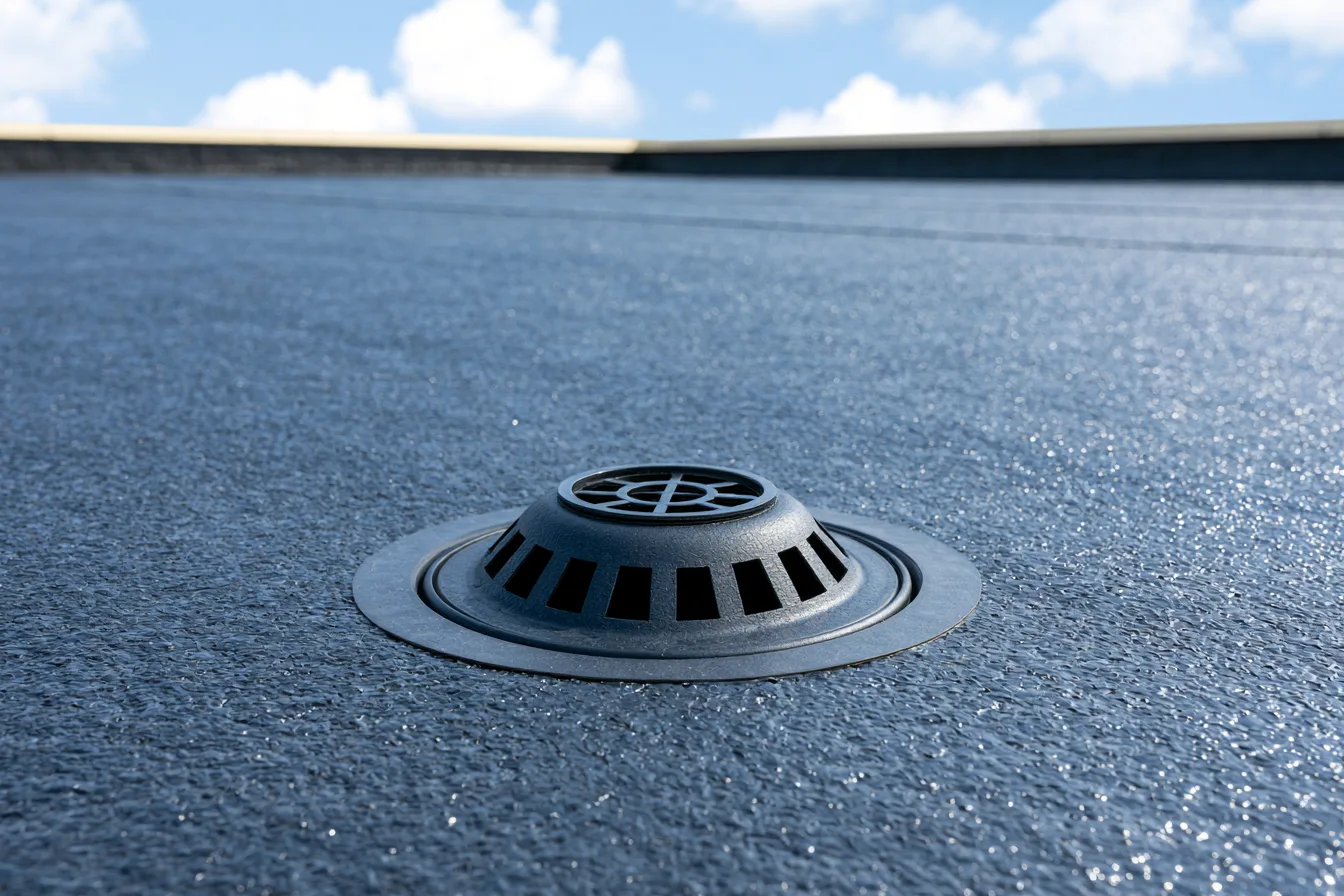
Drainage, membrane condition and the assembly below establish the work.
Explore flat roofing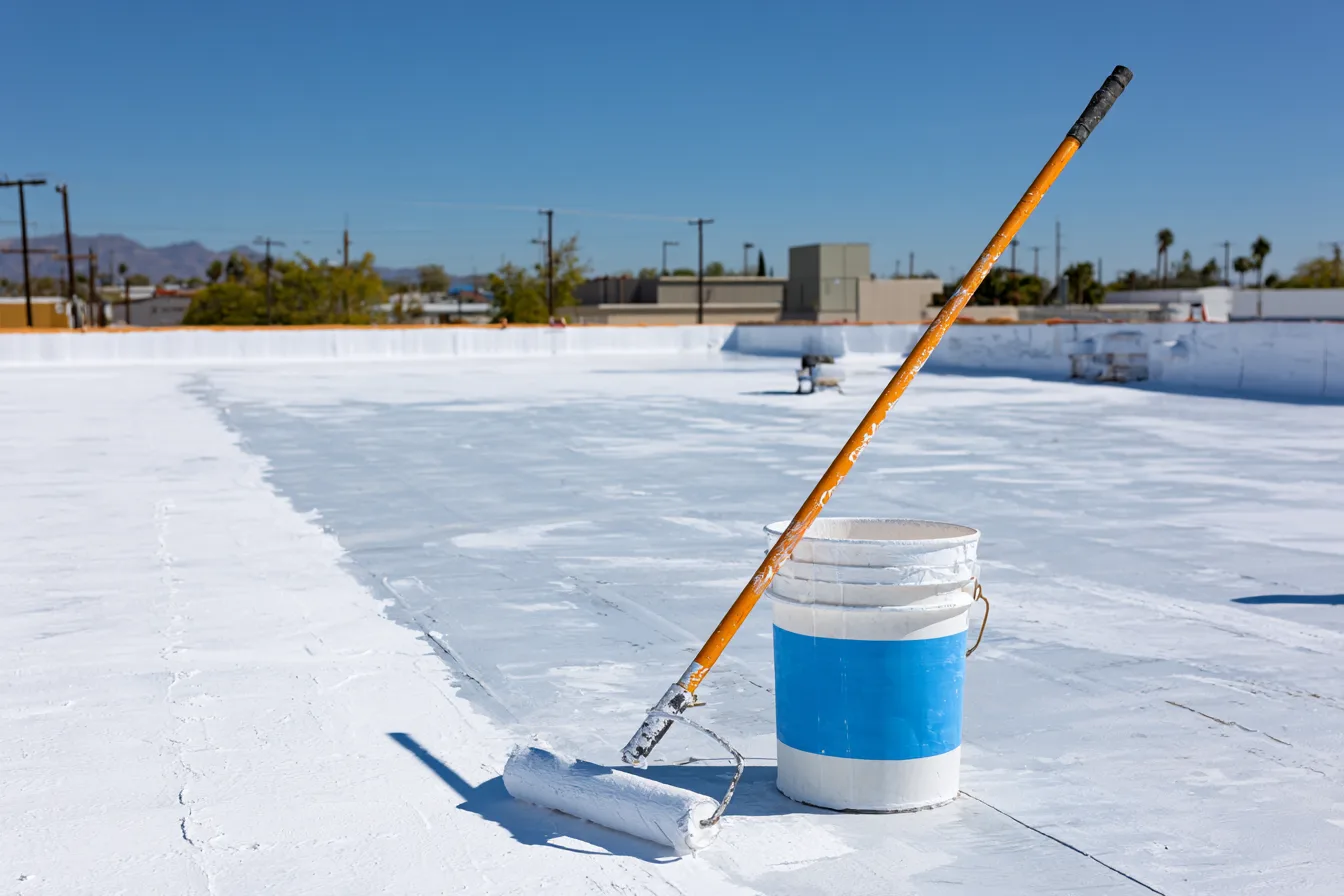
A coating requires a suitable base and cannot replace wet insulation.
Explore roof coatings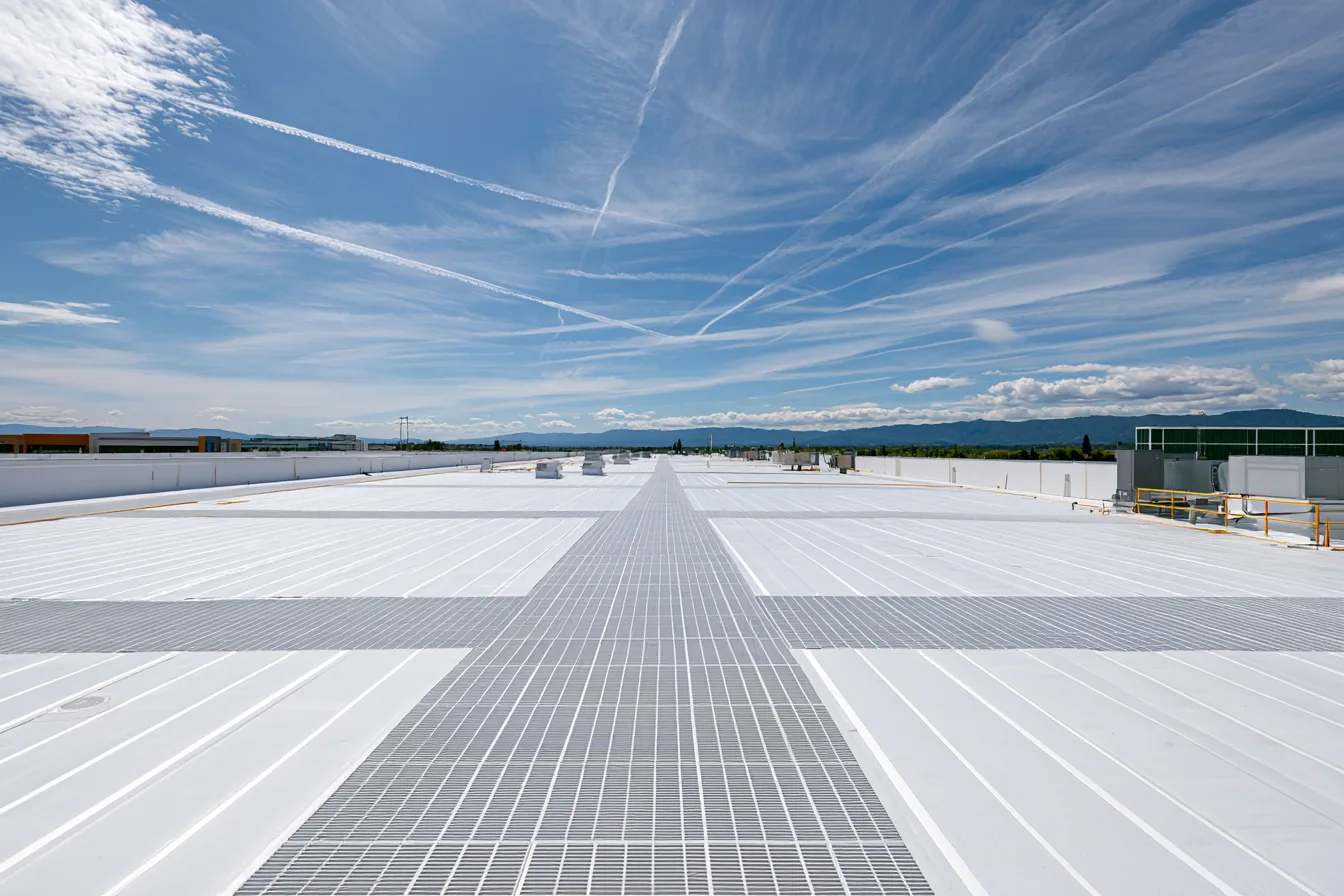
Keep drainage and details in view while planning repair and future capital work.
Explore roof maintenanceWater needs a path to drains, scuppers or gutters. Debris, damaged outlets and roof geometry can interrupt that path. Persistent standing water needs its cause considered before a surface repair is chosen. Adding coating does not create missing slope or restore a failed drain connection.
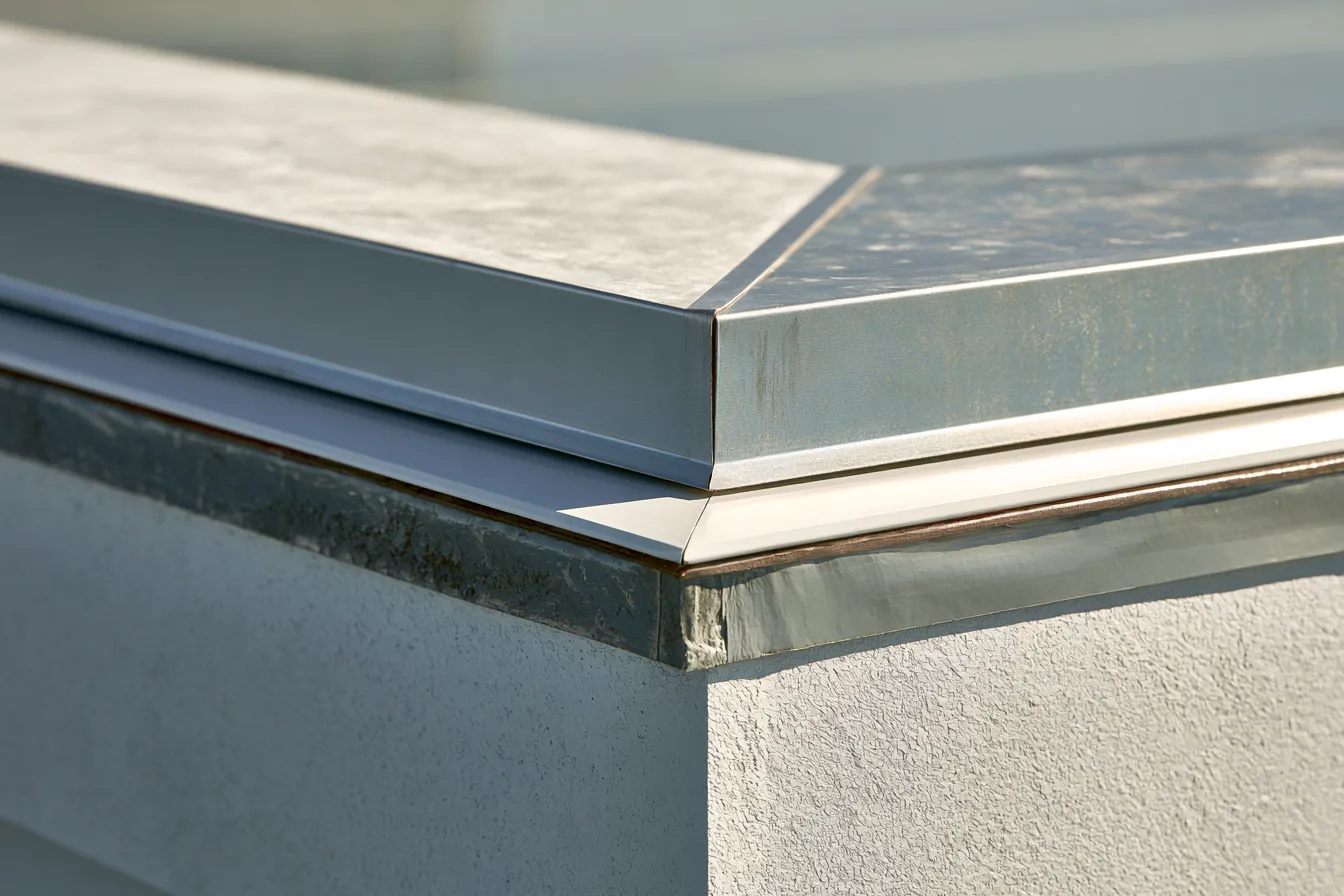
Rooftop units bring curbs, service traffic and penetrations. The roofing detail has to accommodate the equipment support and its flashing. Walkway protection and coordination with equipment service help prevent new damage around completed roof work.
Tenant entrances, stock, loading areas and the use of spaces below all affect how work is arranged. Those needs belong in the scope discussion early.
We need to understand access routes, roof equipment, entrances and any areas where water is entering.
Removal, temporary protection, material staging and equipment work need to fit the actual project. Phasing is considered when the assembly and access support it.
The condition found informs immediate work and longer-term replacement decisions. A localized repair should not conceal a wider moisture or deck problem.
Commercial prices depend on the building’s actual roof assembly. Residential shingle rates do not price a membrane, coating or commercial replacement.
Insulation thickness and moisture, deck condition, attachment, membrane selection, parapets, drains and equipment flashings affect the work. Removal and disposal differ by the existing system.
Access, occupied-space protection, staging and equipment coordination shape the project. Work that can remain local has a different scope from replacing wet layers across a wider area.
A coating can be part of a suitable restoration system after defects and moisture conditions are addressed. It does not fix a failed deck, replace wet insulation or correct inadequate drainage.
Low-slope roofs still need to drain. The roof assembly, drains or scuppers and overflow provisions work together. Persistent ponding calls for an assessment of the cause.
Building use, the extent of removal, protection needs and access determine the work plan. Occupancy and phasing are discussed for the actual property rather than promised in advance.
Tell us the building location, system if known, and how the roof concern affects the property. Mention water entering occupied space.
(913) 808-3279